
Risk identification and mitigation
Risk identification is considered best practice prior to implementation during the implementation planning stage. A risk rating (e.g., low, med, high, critical) is typically calculated using a risk matrix. The risk matrix consists of two input factors:
- Risk likelihood: How likely you think the risk is to occur (e.g., rare, unlikely, possible,…)
- Risk impact: The impact to the organization if the risk does occur (e.g., negligible, minor, moderate,…)
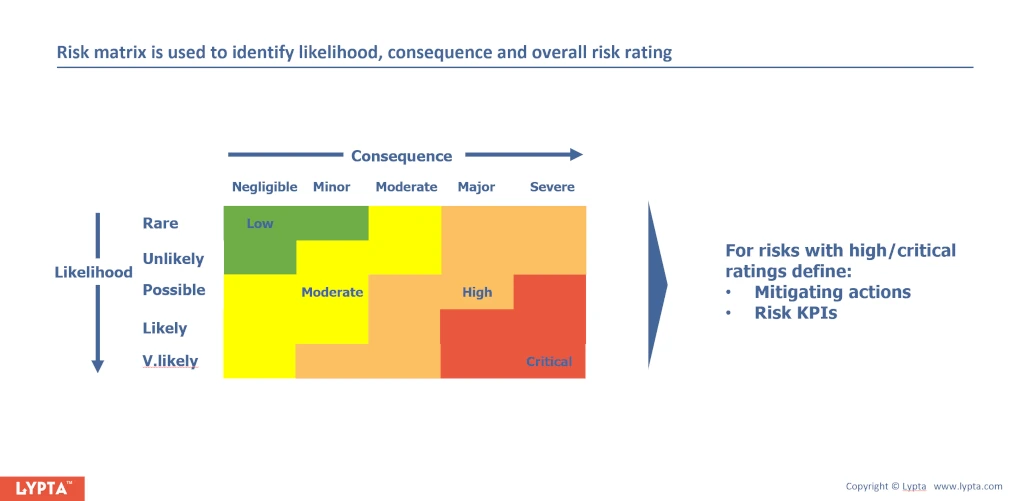
Risks that are both likely to occur and have high impact are deemed to have the highest risk ratings whilst risks with low likelihood and low impact are deemed to have the lowest risk ratings.
Risks with a high risk rating should have mitigating actions added to the implementation plan to reduce the likelihood and/or consequences of the risk eventuating.
Gate approvers should require initiative owners identify potential risks for any initiatives that carry significant risk (business, product, safety etc).
Any risks identified prior to implementation should then be reviewed from time-to-time during implementation.
Create initiative risk
Steps to create a risk:
- Select ‘Risks’ tab for the initiative
- Select ‘Create risk’ button
- Complete ‘Create risk’ form
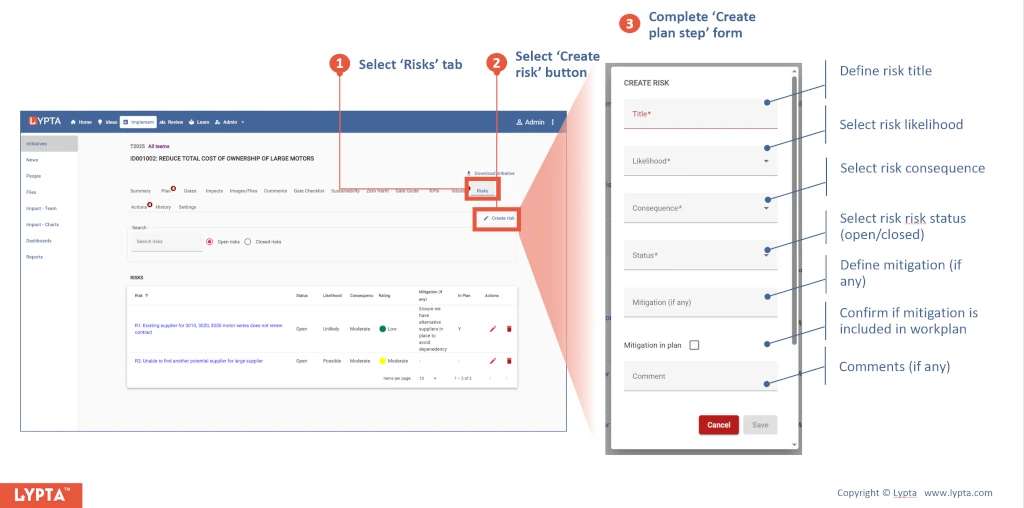
Initiative risks can be opened/closed at any point during the initiative lifetime and risks should be regularly reviewed to check if the status has changed or they can be closed out (e.g., every 2 weeks or so). Creating a risk requires:
- Title: Short one line description of the risk
- Likelihood: Risk likelihood (e.g., rare, unlikely, possible,…). These are defined by your Super Admin and should reflect the risk categories in use in your organization
- Consequences: Risk consequence (e.g., negligible, minor, moderate,…). These are also defined by your Super Admin
- Mitigation (if any): Any mitigating actions that can be taken to reduce the risk from eventuating
- Mitigation in plan: Y/N – Has the identified mitigating action been included in the initiative’s implementation plan. This should happen for any risks with a high risk rating
- Comment: Further comments if any needed