Stage gating – how it works
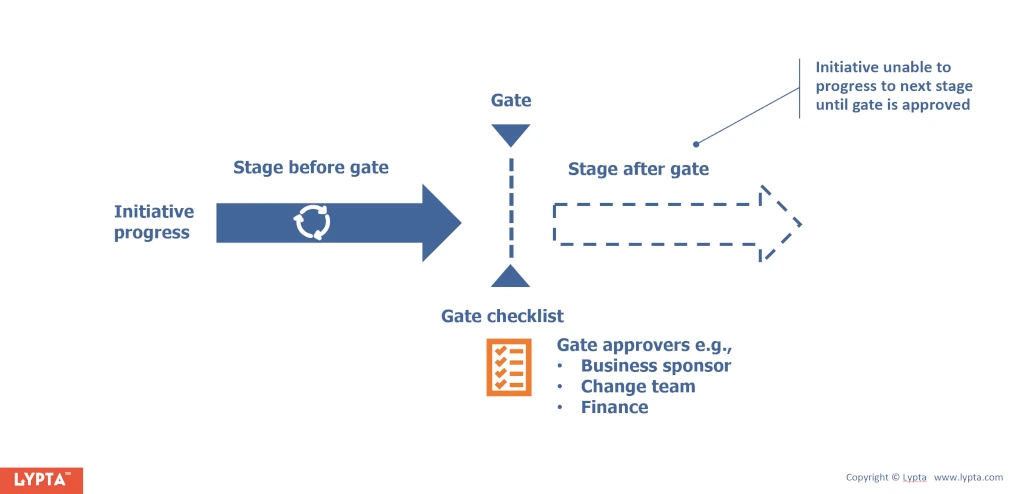
Using stage gating ensures that an initiative does not proceed to the next stage until all required stakeholders have given their approval at the ‘stage gate’.
Stage gating – why it’s used
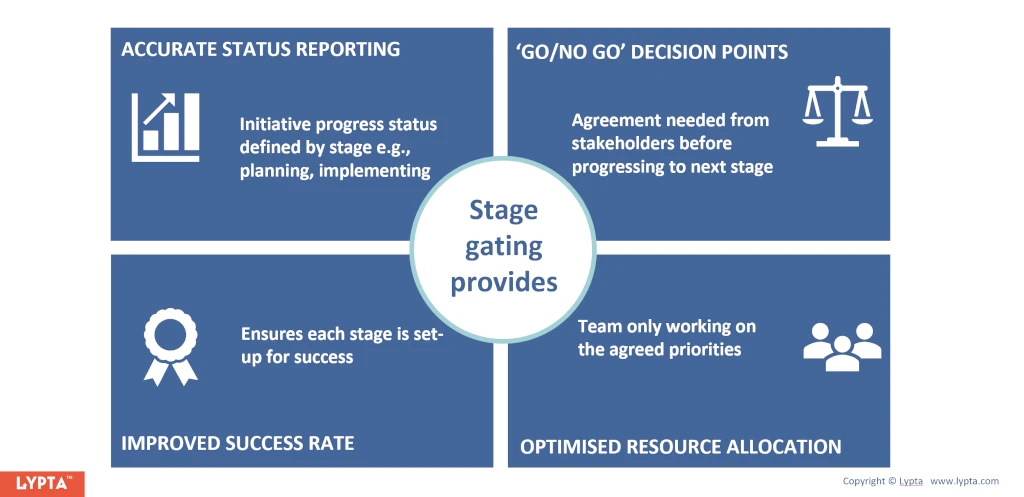
Stage gates are primarily used for the following benefits:
- ‘Go/No Go’ decision points: Control the progress of the initiative through implementation and ensure all stakeholders are aware of the costs and risks associated with the next stage before actually approving the gate and progressing to the next stage
- Optimised Resource allocation: Team only work on the agreed priority initiatives
- Improved success rate: Ensure each stage is set-up for success by reviewing a gate checklist and not allowing the initiative to progress until the required criteria are met
- Accurate status reporting: Provide accurate reporting on the current status of the initiative e.g., ‘evaluating’, ‘planning’, ‘implementing’, ‘delivering’, ‘locked-in’.
Gates approved by stakeholders enable the organization to have confidence in the reported initiative status, the expected impact values and implementation dates.