
Continuous Improvement pipeline
For Continuous Improvement, the improvement pipeline is typically fairly simple as the initiative moves from an initial idea or concept through stage gates to being finally implemented and ‘locked-in’:
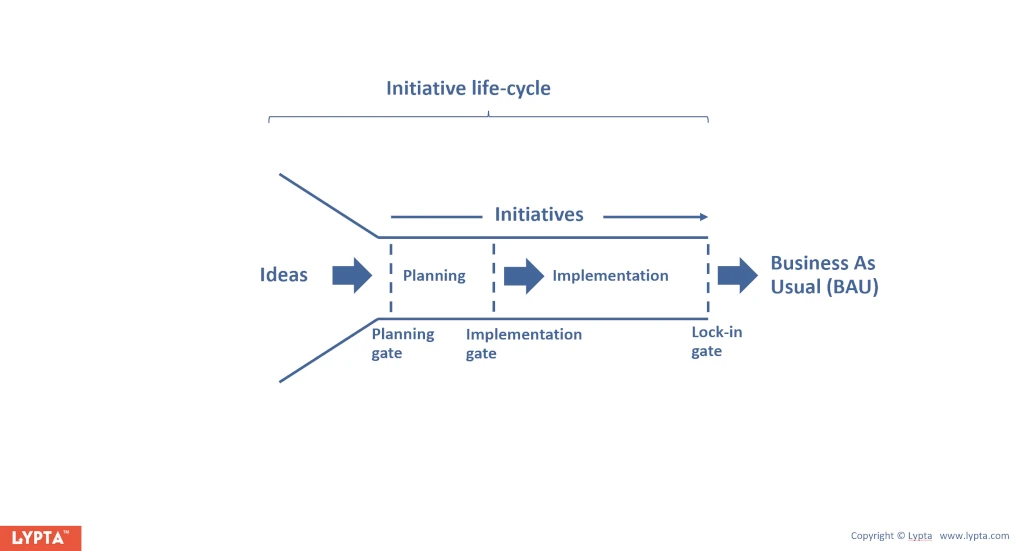
For Continuous Improvement, the improvement pipeline is fairly straightforward and may simply consist of three stages:
1. Planning
-
Key activities: Define costs and benefits. Determine main tasks/milestones and associated resources needed during implementation. Define risks and mitigations. Define tracking KPIs including physical KPIs to track success and potential risks
-
Who is involved: Initiative owner, key stakeholders and Finance
-
Typical timing: 1-4 weeks
-
Gate decision (at end of stage): Determine if the business wants to implement the initiative (costs, resourcing and business risks are acceptable)
-
Gate approvers: Finance (planned cost/benefits) + Workstream sponsor/business owner (planned cost/benefits + implementation plan)
2. Implementation
-
Key activities: Complete the workplan defined in the planning stage including all sustainability steps to achieve final lock in steps once initiative is delivering benefits including training, updating documentation, updating KPIs/reporting. Escalate issues for resolution if needed. Track leading and lagging KPIs to measure progress and ensure any significant risks are under control.
-
Who is involved: Initiative owner and all task owners (+ line managers for managing/resolving escalations)
-
Typical timing: 4-24 weeks; dependent on the key steps involved in implementing the initiative
-
Gate decision (at end of stage): Determine if initiative is sustainable and can be handed over to business as usual (BAU) and what the actual benefits of the initiative are
-
Gate approvers: Workstream sponsor/business owner
3. Locked-in
-
Key activities: Business as Usual (BAU)
-
Who is involved: –
-
Typical timing: –
-
Gate approvers: –
Transformation program pipeline
A typical improvement pipeline for a major transformation program might include the following stages:
1. Evaluating
-
Key activities: Define overall benefits and costs and determine if initiative is worthwhile doing
-
Who is involved: Initiative owner (in consultation with key stakeholders e.g., line managers)
-
Typical timing: 1-3 weeks
-
Gate decision (at end of stage): Determine if worthwhile to allocate time/resources to define the work plan
-
Gate approvers: Workstream sponsor/business owner
2. Planning
-
Key activities: Determine main tasks/milestones and associated resources needed during implementation. Define risks and mitigations. Define tracking KPIs including physical KPIs to track success and potential risks
-
Who is involved: Initiative owner, key stakeholders and Finance
-
Typical timing: 1-2 weeks
-
Gate decision (at end of stage): Determine if the business wants to implement the initiative (costs, resourcing and business risks are acceptable)
-
Gate approvers: Finance (planned cost/benefits) + Workstream sponsor/business owner (planned cost/benefits + implementation plan)
3. Implementing
-
Key activities: Complete the workplan defined in the planning stage. Escalate issues for resolution if needed. Track leading and lagging KPIs to measure progress and ensure any significant risks are under control.
-
Who is involved: Initiative owner and all task owners (+ line managers for managing/resolving escalations)
-
Typical timing: 4-24 weeks; dependent on the key steps involved in implementing the initiative
-
Gate decision (at end of stage): Determine if initiative is delivering the expected benefits and, if not, what further actions are needed
-
Gate approvers: Workstream sponsor/business owner
4. Delivering
-
Key activities: Complete final lock in steps once initiative is delivering benefits including training, updating documentation, updating KPIs/reporting
-
Who is involved: Initiative owner
-
Typical timing: 4-12 weeks; dependent on sustainability steps
-
Gate decision (at end of stage): Determine if initiative is sustainable and can be handed over to business as usual (BAU) and what the actual benefits of the initiative are
-
Gate approvers: Workstream sponsor/business owner + Finance (actual costs/benefits)
5. Locked-in
-
Key activities: Business as Usual (BAU)
-
Who is involved: –
-
Typical timing: –
-
Gate decision (at end of stage): –
-
Gate approvers: –
Improvement pipeline – common points
In both example improvement pipelines, two key gates stand out:
-
Implementation gate (prior to implementation): Decision point allowing key stakeholders to determine whether or not to proceed into implementation:
-
Costs/benefits ?
-
Implementation plan and overall timeline known ?
-
Resources known and available ?
-
Risks identified/mitigating actions known ?
-
What does success look like ? KPI baseline and targets ?
-
-
Locked-in gate (at end of implementation): Decision point to determine if the initiative is sustainable i.e., will the benefit continue to deliver expected benefits when running as ‘Business As Usual’ with no initiative owner driving progress. Are we confident that success is sustainable:
-
New processes documented ?
-
Training completed ?
-
Further actions needed before locking in the initiative ?
-
In the enterprise version of Lypta, any number of improvement pipelines and associated stage-gates can be set-up allowing maximum flexibility.