
Initiatives are used to implement ideas from a concept or idea through to completion resulting in an expected performance uplift.
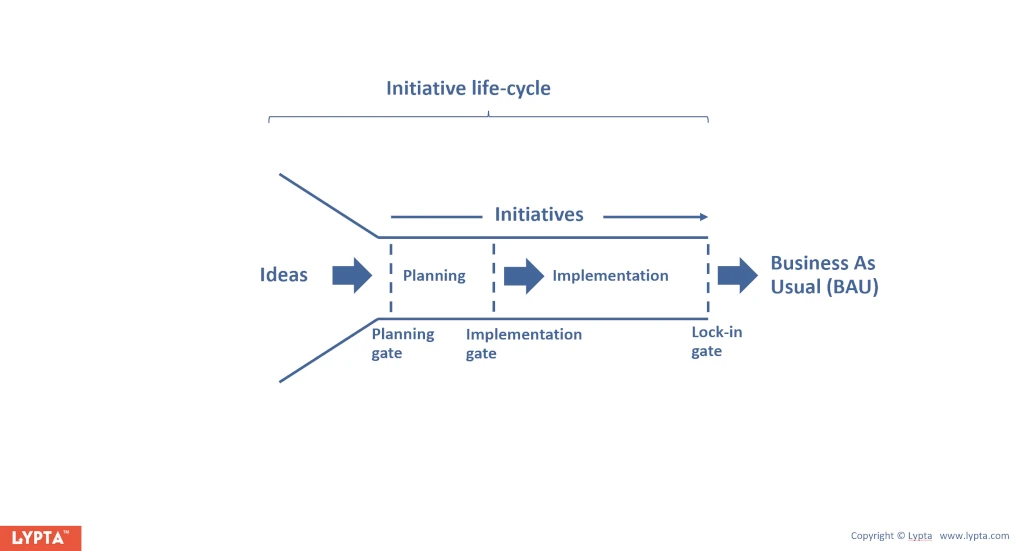
During the initiative life cycle, stage gating is used to ensure that the required actions have been completed at each stage of the life cycle e.g., impact defined, costs/resources estimated, implementation plan completed.
At the final ‘locked-in’ stage gate when the initiative has been completed and is no longer supported as an initiative by the initiative owner (and becomes ‘Business As Usual’), stakeholders should check that the initiative is:
1. Delivering the expected improvement uplift (usually by using KPIs)
2. Expected to sustain (KPIs show consistent performance and steps have been taken to lock-in performance e.g., training)